Student Attendance Systems and RTE Compliance: What Indian Schools Need to Know
How modern attendance systems help Indian schools stay RTE-compliant, automate parent SMS, and produce the reports that boards actually ask for during inspection.
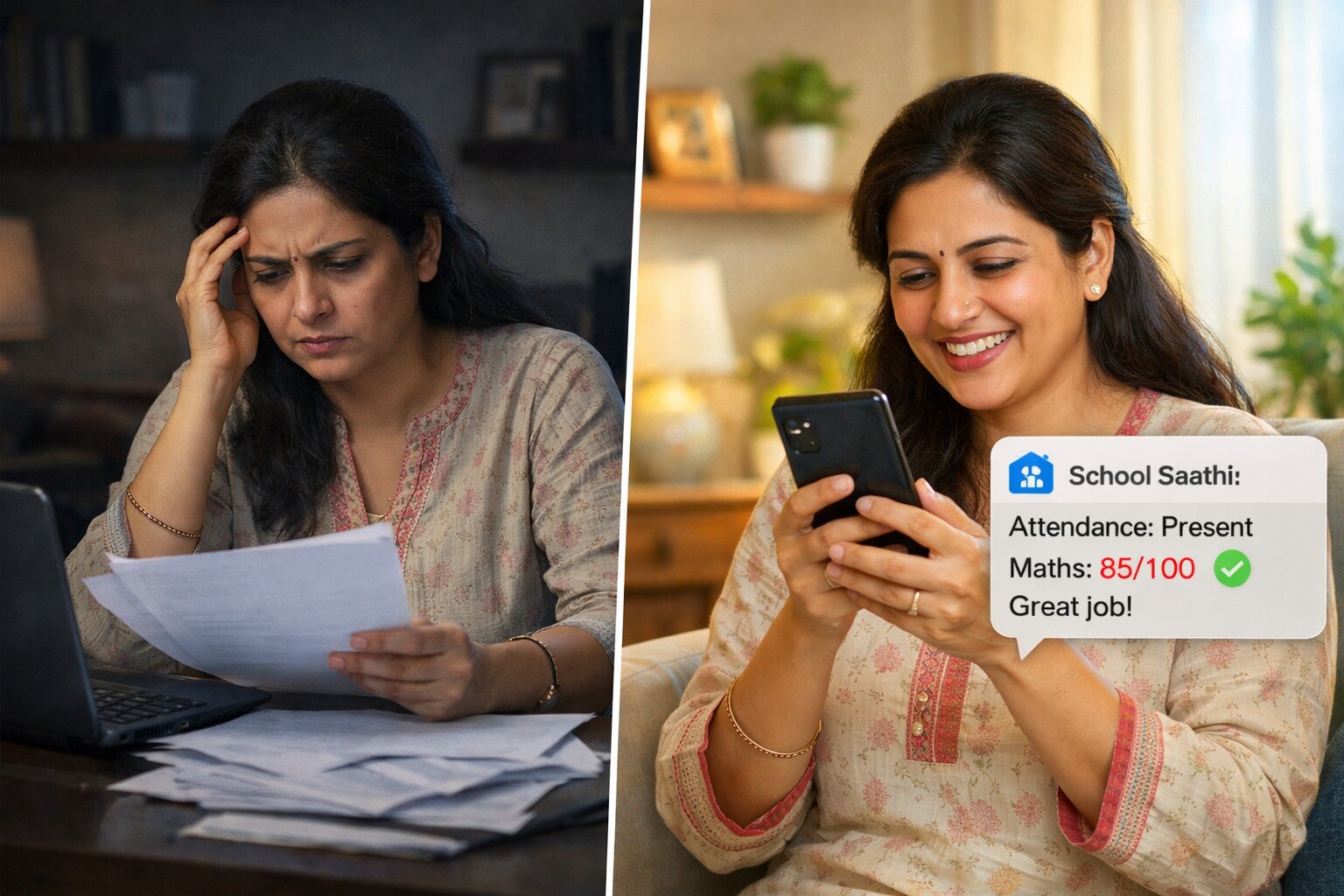
The Right to Education Act and most state board rules require Indian schools to maintain a daily, classwise attendance register, send parent notification on absence, and ensure every student maintains at least 75% attendance to be eligible for promotion. In paper form, this is a quietly massive workload — typically 30 minutes per teacher per day, plus a clerk's afternoon spent on SMS.
A well-built digital attendance system collapses all three obligations into a 90-second daily action and produces inspection-ready reports as a side effect. Here is what to look for.
Class-teacher-driven daily marking. The class teacher marks attendance once at the start of the day, on a phone or tablet, with one tap per student. Bulk-mark-present is the default; only absences need attention. Late and half-day are first-class statuses, not workarounds.
Delegation when the class teacher is absent. Substitute teachers should be able to mark attendance for the day without an admin reset. The system records who marked attendance, so the audit trail is intact even on substitution days.
Admin-controlled SMS queue. Absence SMS goes to parents within an hour, but only after an admin (usually the head clerk) reviews and releases the queue. This catches the cases where a student arrived late but was marked absent, before the parent gets a misleading message.
Attendance percentage with the right rules. Late counts as present (otherwise teachers stop marking late accurately). Half-day counts as 0.5. Approved leave counts as a day off — the school was open, so the day stays in the denominator and earns no credit. These choices directly affect whether a student crosses the RTE 75% threshold, so the rules need to be explicit and editable per school.
Past-session-aware reports. When you generate a student's attendance for the previous academic year, the system must use that year's class assignment — not the current one. This sounds obvious but most simple systems get it wrong, producing reports that show "Class 7 attendance: 0 days" because the student is now in Class 8.
Parent-facing attendance view. A parent should see their child's monthly attendance percentage, the days marked absent, and the cumulative percentage for the year, on a single screen — with a notification when it dips below 80% (early warning before the 75% RTE threshold).
Inspection-ready printable register. State boards still ask for printed registers during inspection. The system should generate a class-wise, month-wise printable register in the exact format the board expects, with the class teacher's name and signature space.
Biometric and barcode integration without lock-in. If you eventually want a fingerprint scanner at the gate or a barcode ID card system, the attendance system should accept events from any compliant device — not lock you into one vendor's hardware. White-labelled OEM devices that integrate via simple webhook are the safest path.
Monthly summary for the principal. Class-wise average attendance, students below 75%, top performers, day-of-week patterns. This is the report that turns attendance from a clerical task into a leadership tool.
A system that does the above turns RTE compliance from a year-end scramble into a daily byproduct of normal teacher work. That is the only sustainable model for schools running with limited admin staff.
Run your school on School Saathi Pro
Trusted by 500+ Indian schools for finance, parent communication, UDISE compliance, admissions and timetables. We'll send you an itemised quote within 24 hours.
See pricing & request a quote